


Theodoridou Evangelia
The ultimate guide to SEO and GEO strategies
Win visibility for your site using SEO and GEO
Search is changing. For years, the core goal of an SEO strategy was fairly clear: get a site to rank as high as possible in Google's organic results, earn clicks, and convert part of that traffic into leads, sales, or brand awareness. That isn't over. SEO remains critical. But on its own, it's no longer enough.
Users don't search only on Google anymore. They ask ChatGPT, Perplexity, Gemini, Copilot, or they see answers directly through AI Overviews. If your brand, your site, or your content can't be recognized, understood, and used by these systems, then you lose a large part of your visibility. ChatGPT has reached a total daily prompt volume equivalent to roughly 18% of Google's daily searches, showing that a significant share of everyday information-seeking is already moving to AI tools.
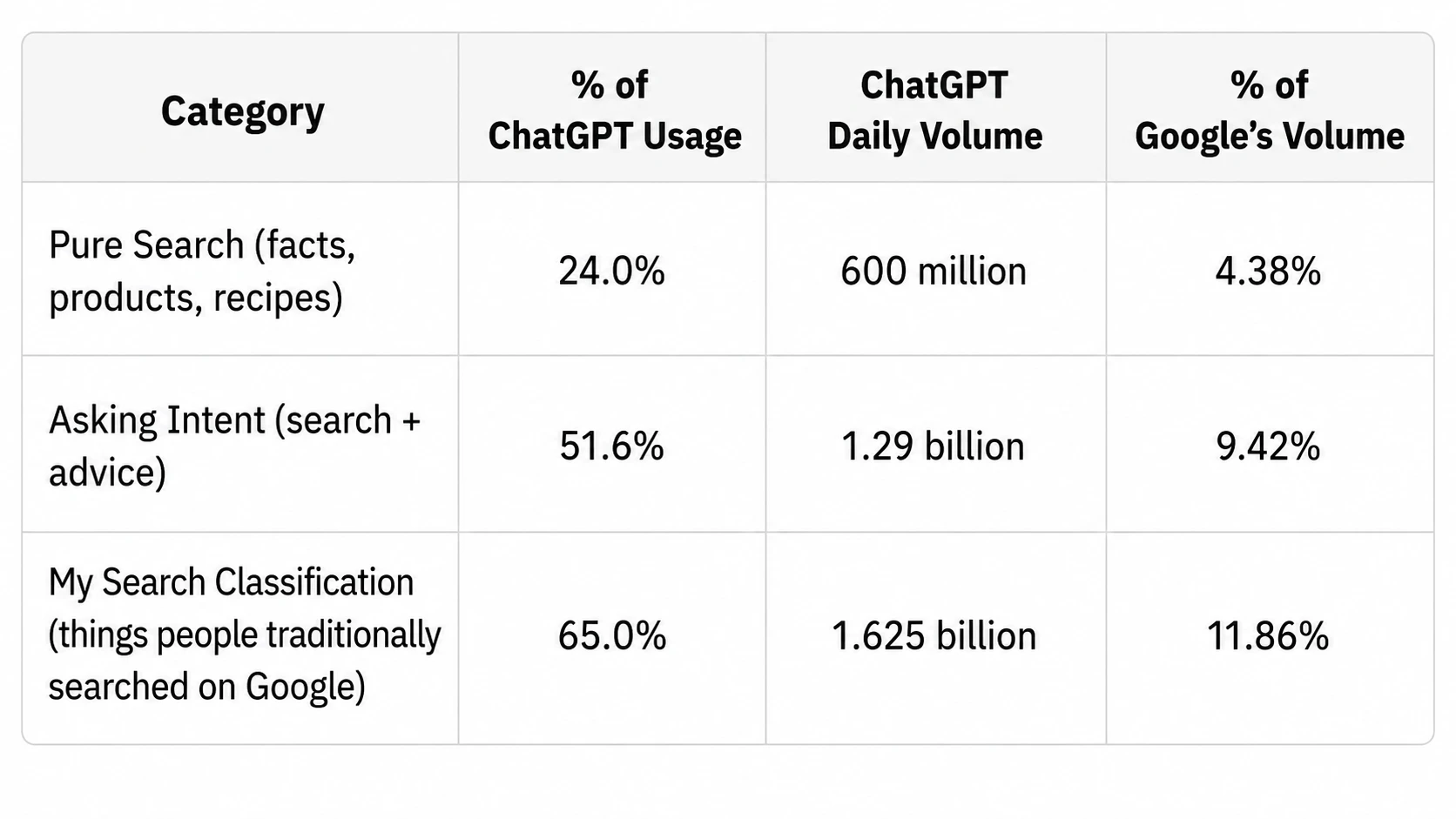
ChatGPT search usage compared with Google volume
What is SEO (Search Engine Optimization)?
SEO is the process of optimizing a site so it appears in higher positions in the organic results (SERPs) of search engines such as Google. Its goal is organic traffic without paid advertising. It rests on four pillars:
- Keyword research: understanding the phrases and the search intent of your audience.
- Content / On-page SEO: proper text structure, headings, meta titles & descriptions, URLs, internal links, focus & supportive keywords.
- Technical SEO: speed, mobile-friendly design, SSL, clean URL structure, crawlability.
- Link building (off-site SEO): quality backlinks as an indicator of authority and trust.
In simple terms, SEO helps a site answer users' searches better and become more understandable to search engines. Google still emphasizes helpful, reliable, people-first content that is, content created to help real people rather than simply to manipulate rankings.
For example, a company selling CRM software shouldn't just write an article titled "CRM software." It should answer real questions: "what is a CRM," "how do I choose a CRM for a small business," "CRM vs Excel," "how much does a CRM cost," "what features does a sales team need." That's SEO based on user intent, not mere keyword repetition.
What is GEO (Generative Engine Optimization)?
GEO is the optimization of your content so it gets mentioned and cited as a source (citation) inside the answers of AI tools such as ChatGPT, Perplexity, Gemini, Copilot, and Google AI Overviews. It doesn't aim for top rankings on Google, but for the AI to "read" your content, trust it, and incorporate it when composing an answer to a user's query. In SEO you want the user to see your link and click it. In GEO you want your content to be considered a trustworthy source, so the AI system uses it as part of its answer. Example: a user may no longer type into Google "best SEO strategy for a B2B company." They might ask an AI tool: "I have a B2B company in Greece. How should I organize my SEO and content strategy for the next 6 months?" If your site has clear guides, examples, structured data, case studies, and clear answers, it has a greater chance of being recognized as a useful source.
What's the difference between SEO and GEO?
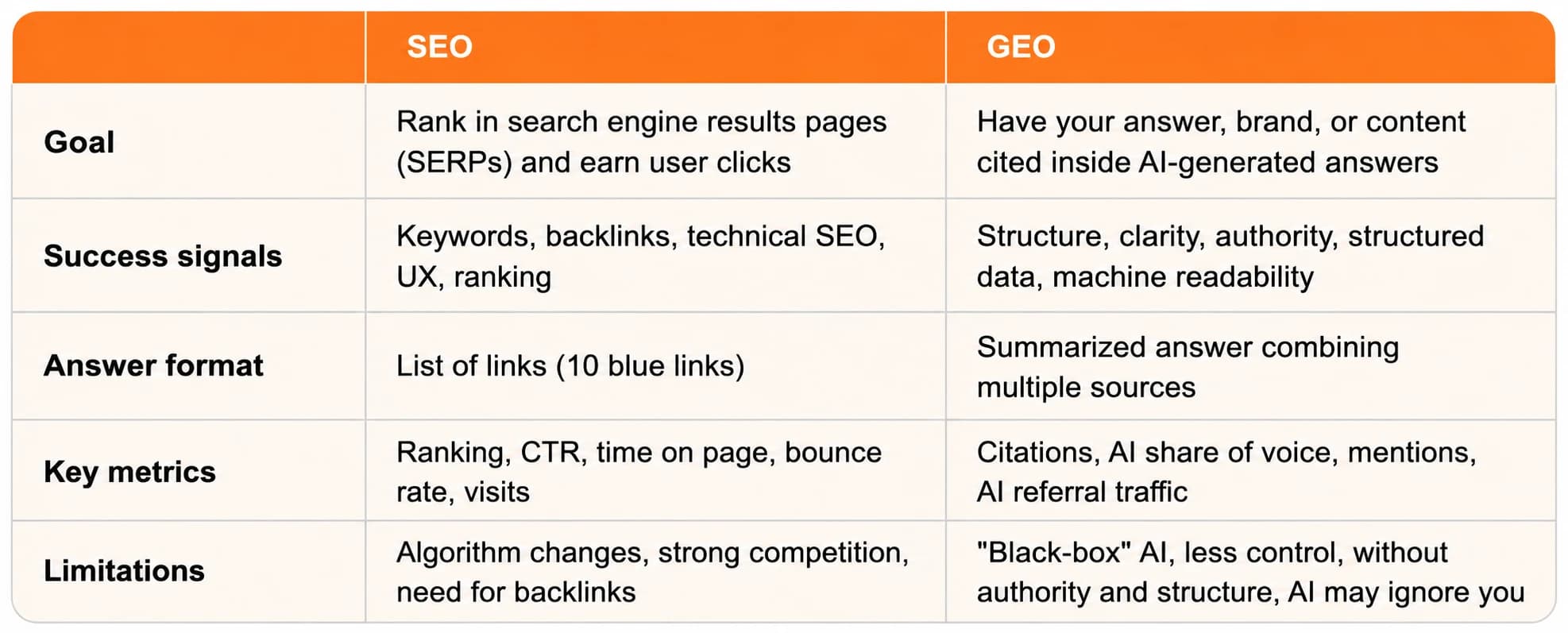
SEO vs GEO comparison
Many approach GEO with the assumption that "if I do GEO, I'll definitely get results." If your site is weak on SEO, without authority, without a clear structure, without trustworthy content, it won't be recommended inside AI tools just because you added a few FAQ questions. These are actions that need to work in combination.
Why should all businesses and professionals apply a GEO strategy?
The numbers clearly show that search behavior has changed:
- Zero-click searches: according to Similarweb, the share of news searches on Google completed without a click rose from ~56% (May 2024) to ~69% (May 2025) after AI Overviews.
- AI traffic surge: 2026 studies report AI traffic growth of over 500% year over year, with AI traffic converting up to ~4.4 times better than traditional organic traffic.
- Low adoption = opportunity: ~92% of marketers intend to optimize for AI search, but only ~40% already do. The Greek market is still in an early stage, only a few businesses have moved into active GEO, and the term often appears as "AI SEO." This lag is an opportunity: a small or medium-sized Greek company with clear, well-documented content can become the source that ChatGPT or Gemini recommends for its industry, before the competition catches up.
The most encouraging finding is the Princeton GEO study (Aggarwal et al., KDD 2024), which showed that simple tactics, such as adding statistics, citations, and quotes from experts, increase visibility in AI answers by up to ~40%. And, even more important: smaller, lower-ranked sites benefited the most. "AI tools also draw from international sources; quality and structure matter more than domain size."
How do you create content that works for both SEO and GEO?
1. Content research & strategy
Start with normal keyword research for SEO (e.g., "SEO strategy 2026," "digital marketing for SMEs"). In parallel, think about the questions someone would type into an AI: "What is GEO and how does it help my brand?", "SEO or GEO which should I choose?". You need to understand which question the user wants to answer, what level of knowledge they're at, and what kind of decision they're trying to make.
AI breaks a complex question into smaller sub-questions and searches for each one separately. Make sure your content also covers those small pieces.
2. Create content that is "GEO-ready"
- Front-load the answer: answer the main question within the first 200 words. 2026 analyses show that roughly 44% of AI citations come from the first 30% of the text.
- Add statistics & quotes: include expert quotes. The Princeton research showed these increase visibility by 41%. Speak in numbers, not generalities. Use tables and examples.
- Cite trustworthy sources: paradoxically, citing data yourself increases the likelihood (~+27%) that the AI will cite you.
- Structure the text properly: clear H1→H2→H3 hierarchy, short paragraphs, bullet lists, tables, Q&A sections.
- Add structured data / schema: FAQ, HowTo, and Article schema help generative systems understand what the page contains. 3. Maintain strong SEO foundations GEO builds on top of SEO; it doesn't replace it. Keep your site fast to load, mobile responsive, and crawlable, and build quality backlinks. Something very useful for AI tools is keeping your content fresh and updated.
How do I measure SEO and GEO results?
SEO has established metrics (ranking, traffic, bounce rate, organic traffic). GEO, on the other hand, requires you to track citations/mentions, whether and how much your content is cited as a source in ChatGPT, Gemini, Perplexity, and AI Overviews.
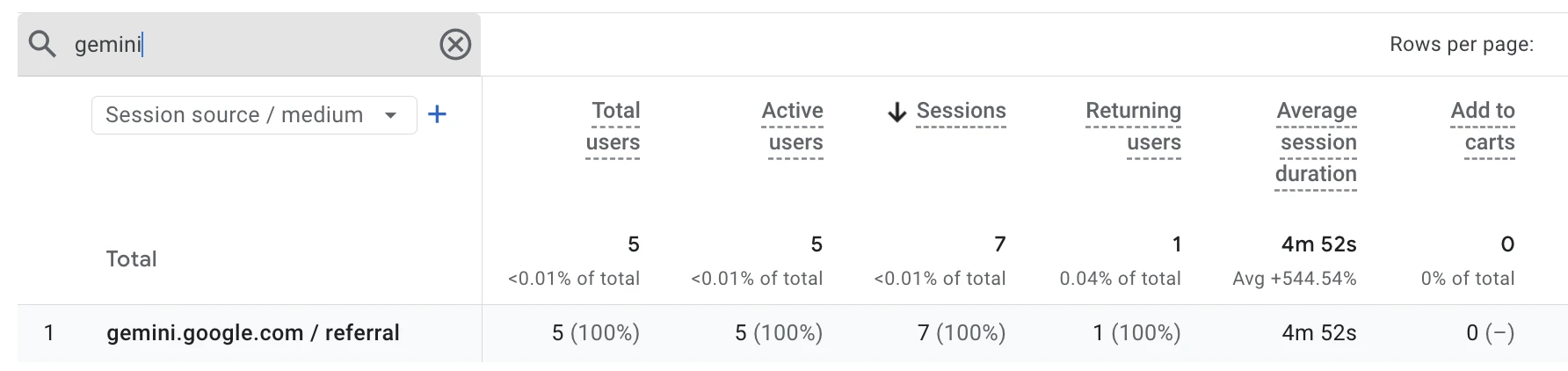
How do you do this in practice? In Google Analytics 4 you can now see traffic coming from AI tools.
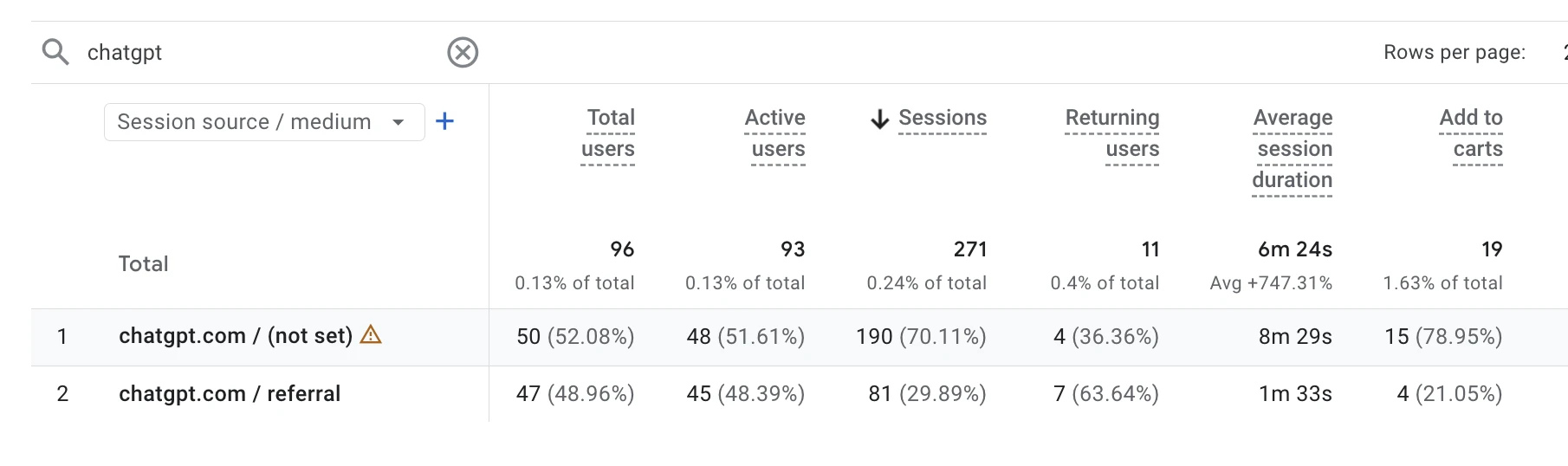
Caption goes here
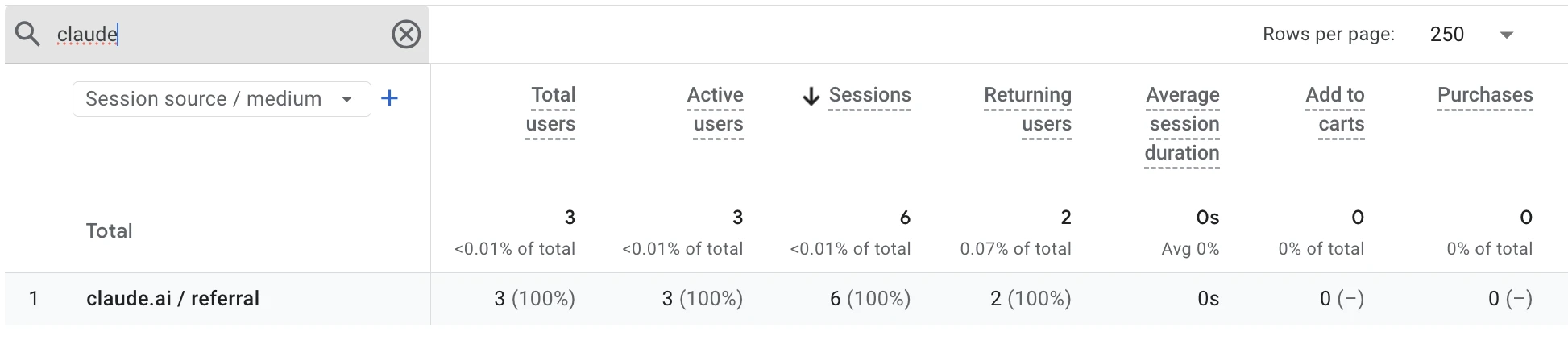
Caption goes here
Caption goes here
There are also AI prompting tools, such as Peec AI, Profound, HubSpot, Semrush AI, Ahrefs, and others, that show citations, AI-generated traffic, and brand visibility in LLM environments. You can also track your share of voice in generative search, that is, how much you appear versus competitors in your industry's AI answers. Finally, you can look at your brand's sentiment.
How does AI "describe" your brand? Beyond whether the AI mentions you, it also matters how it describes you. When someone asks ChatGPT or Gemini about your industry, the model doesn't just give you a spot on a list, it characterizes you with words. It might present you as an established expert, as just another provider, or even with errors. Here you're not tracking ranking, but reputation: whether the AI treats you as an authority in your field. This matters because many users read only the AI's description and decide based on it, without even visiting your site.
Frequently Asked Questions (FAQ)
What is the basic difference between SEO and GEO?
SEO wants you to appear high in search engine results (e.g., Google's) and get a click. GEO wants your content to be considered a trustworthy source so that an AI tool (ChatGPT, Gemini, Perplexity) uses it inside its answer. That said, SEO and GEO share common foundations.
Will GEO replace SEO?
No. Traditional searches continue and SEO remains critical. All businesses and professionals today should combine SEO and GEO and treat them as a complementary strategy, not one instead of the other.
Do all sites need GEO?
Businesses that aim for brand awareness, informational content, services, or B2B leads, yes, they need GEO. If your audience is already asking AI tools about your industry, then GEO concerns you.
What content works best for GEO?
FAQs, how-to guides, listicles (i.e., comparisons), analyses, case studies, and articles with data and statistics, anything that answers real questions clearly and with a clean structure.
How quickly do I see GEO results?
As with SEO, GEO doesn't deliver immediate results the way, for example, performance marketing activities do. AI systems need to discover and trust your updated content. To see results it takes weeks to months, depending on your site's authority.
How do I start if I already have SEO?
You don't need to start from scratch. Audit your existing articles, restructure them so they're "GEO-ready" (front-loaded answers, headings in question form, bullets, statistics, citations, schema), and then produce new content with a dual goal, SEO and GEO.
Can I see whether ChatGPT or Perplexity mentions me?
Yes. You can check your Google Analytics or use dedicated tools (e.g., Peec AI, Profound) that automatically track your mentions in AI answers.
Table of contents