

How to master influence tactics through content
A step-by-step guide to turn content into a strategic asset that drives trust, engagement, and conversion at scale.
Influencing represents "the power to cause changes without directly forcing them to happen".
Content knows how to connect, educate, inspire, and involve others in powerful ways. Video content spreads 40 times more on social media than other content types. Research shows 62% of consumers develop positive brand perceptions after social media interactions. Understanding different influence strategies and knowing how to influence others through well-crafted content has become crucial for anyone who wants to make their mark.
The most effective influence tactics use storytelling at their core. Research confirms that "Story is a powerful and persuasive communication device that can move people to dream big dreams, embrace big ideas, and accomplish big things". Authentic stories trigger oxytocin release in our audience and create positive connections that drive action.
“The most powerful person in the world is the storyteller. The storyteller sets the vision, values, and agenda of an entire generation that is to come.” Steve Jobs, Co-Founder, Apple.
This step-by-step piece will show you proven methods to become skilled at influence through content creation. You'll learn to build genuine connections while achieving your goals.
Key Takeaways
Master influence through content by combining strategic storytelling, data-driven insights, and authentic audience connection to drive meaningful action without manipulation.
• Understand your influence foundation: Choose between push tactics (urgency/authority) and pull tactics (inspiration/consultation) based on your specific goals and context.
• Build audience-first content strategy: Define target demographics and psychographics deeply, then align content formats with influence objectives for maximum resonance.
• Combine storytelling with data: Stories are 12x more memorable than statistics alone, Blend emotional narratives with credible evidence to activate both rational and emotional decision-making.
• Measure and refine continuously: Track engagement quality over quantity, gather authentic feedback, and scale successful tactics across platforms using data-driven insights.
• Leverage strategic partnerships: Collaborative content delivers 2x stronger results than solo efforts while expanding reach and adding credibility to your message.
True influence develops through consistent, authentic communication that builds trust over time. Build genuine value that naturally drives action, rather than pushing people to respond. Strong influence comes from combining the right tactics for the right audience at the right time.
How to influence others: proven persuasion techniques and content strategies
People can influence others by changing their behaviors, beliefs, or actions without force. This power comes from effective communication and persuasion rather than manipulation or coercion.
What does it mean to influence others?
Real influence helps shape how others think and act in ways that benefit everyone. You need several elements to make this work: trust-building, active participation, wider reach, and meaningful results. True influence goes beyond mere popularity. People must see you as a trusted voice whose recommendations matter.
Great influencers rarely command others directly. They guide and inspire people toward shared goals by using collective wisdom and securing commitments that deliver results.
What are the types of influence tactics, and when should they be used?
Research shows nine main influence tactics that work in different situations:
• Rational Persuasion: Rational persuasion is a way of influencing people using logical arguments and factual evidence. For example, a brand shares data, research findings, or side-by-side comparisons in its content to logically demonstrate why its product or service delivers better results, explaining clearly how this leads to measurable benefits for the audience.
• Inspirational Appeals: This tactic appeals to people’s emotions, values, and ideals. Inspirational appeals aim to arouse enthusiasm or increase employees’ confidence. For example, a company tells a compelling story or presents a strong vision that connects with its audience’s values and aspirations, inspiring them emotionally before introducing the product or service.
• Consultation: This tactic is the most democratic and collaborative. It requires involving people in strategic planning and decision-making. For example, an influencer asks their audience for input on which features matter most in a new product they are about to introduce, runs polls to gather preferences, and incorporates that feedback before officially presenting the final recommendation.
• Ingratiation: Ingratiating means getting on someone’s good side before asking them to do something. It might look like offering to help them with something or paying them a compliment. For example, a brand highlights the sophistication, ambition, or good judgment of its community in its content, creating a positive emotional atmosphere before recommending an offer.
• Personal Appeals: This tactic relies on interpersonal relationships to persuade someone to do something as a “personal favor.” The person on the receiving end may experience a certain amount of pressure. For example, a company addresses its audience as a close community, reminding them of the relationship and shared journey they have built, then asks for support such as sharing, reviewing, or participating.
• Exchange: This tactic involves offering a reward or benefits to employees who comply with what you request of them. For example, a business offers a clear benefit within its content, such as exclusive access, a bonus, or a discount, in return for a specific action like signing up, referring a friend, or making a purchase.
• Coalition: Coalition is a tactic that leaders use to leverage employees who support them. They form alliances with these employees and use them to try to influence others. For example, a brand collaborates with respected partners, experts, or other creators and produces joint content, using combined credibility and audiences to strengthen its influence.
• Pressure: The aim of pressure is to make a person change their behavior or carry out an order by using intimidation, threats, and authority.. For example, a company emphasizes limited availability, deadlines, or potential loss within its content, encouraging faster action by highlighting time sensitivity or scarcity.
• Legitimizing: Legitimizing means convincing a person they should comply with a request, given their position or situation. For example, a brand refers to its authority, certifications, regulations, or formal role in its content to justify a request or recommendation, reinforcing credibility through recognized standards or position.
Your goals determine which tactics work best. Rational persuasion suits logical decisions, while inspirational appeals work better for emotional buy-in.
Push vs pull influence tactic: Choosing the right approach
Push and pull strategies represent two main categories of influence tactics. Push tactics use pressure, assertiveness, or authority to gain compliance. Pull tactics motivate others through inspiration, consultation, and rational persuasion.
Both approaches have their place. Push strategies shine in emergencies or when immediate action matters. Pull strategies create better long-term results by encouraging genuine commitment instead of mere compliance.
Success with influence comes from applying each tactic at the right time based on your specific situation and goals, rather than relying on just one approach.
How to build a content strategy that supports influence?
“We need to stop interrupting what people are interested in and be what people are interested in.” Craig Davis
A solid foundation helps you create content that persuades others. Your content strategy serves as a guide to influence your target audience through platforms and touchpoints of all types.
Define your audience and their needs
Your success in influence starts when you know who you want to reach. You need to learn both demographic information (age, gender, occupation) and psychographic traits (values, priorities, pain points). A full picture of your audience helps you create content that truly appeals to them.
Here are some ways to research:
• Conduct surveys and interviews to gather direct feedback. Outcome-driven questions like “What is your biggest struggle related to [your niche] right now? What have you already tried to solve it? What frustrates you about existing creators in this space? What would make you trust someone enough to buy from them? How much would you realistically invest to solve this problem?” can help you define your audience.
• Analyze social media insights to uncover engagement patterns. Look at “Which topics generate saves consistently? Which posts attract long comments? Which format increases followers?”. An example of pattern is: Educational carousels get saves. Personal stories get comments. Tutorials get DMs.
Caption goes here
• Develop detailed buyer personas that break down your audience.
Demographics: Age range, Career stage, Income bracket, Location
Psychographics: What they fear?, What they want to become?, What frustrates them daily?, What they are ashamed to admit?, What they secretly aspire to?
Behavioral patterns: Do they binge on content or skim?, Do they prefer short-form or deep dives?, Do they invest in courses?, Do they follow many creators or few?
Find your target audience
Some marketers try to appeal to everyone and end up connecting with no one. Your focus should be on finding target segments that can become loyal followers. Before you create content, express your audience's specific needs, priorities, and problems they want to solve.
Choose the right content formats for your message
Your choice of content format affects how people interact with it. Short-form videos are still the most engaging type of social media content. Users rate them as brand content they're most likely to interact with on almost every platform.
Each content format plays a distinct role in the customer journey. Blog posts and articles build awareness by helping new audiences discover you through search and shared insights. Podcasts strengthen credibility by allowing you to demonstrate depth, perspective, and consistency over time.
Choose formats based on two factors: what your audience prefers to consume and what outcome you want to drive. Align distribution channels and content style with your strategic objective, whether that is visibility, authority, engagement, or conversion.
Arrange your content with influence goals
Content should serve a clear influence objective. If it does not support a specific behavioral outcome, it is noise.
For rational persuasion, use content that demonstrates logic and evidence, such as data-driven blog posts, research breakdowns, analytical videos, or detailed LinkedIn articles. The objective is to reduce uncertainty through proof and structured reasoning.
For inspirational appeals, use storytelling formats such as short-form videos, personal narratives, transformation stories, or testimonial-based content. The objective is emotional identification and motivation.
For social proof, highlight user experiences, audience wins, community milestones, or visible engagement signals. The objective is validation.
For authority positioning, publish expert commentary, industry analysis, thought leadership posts, or in-depth educational content. The objective is credibility.
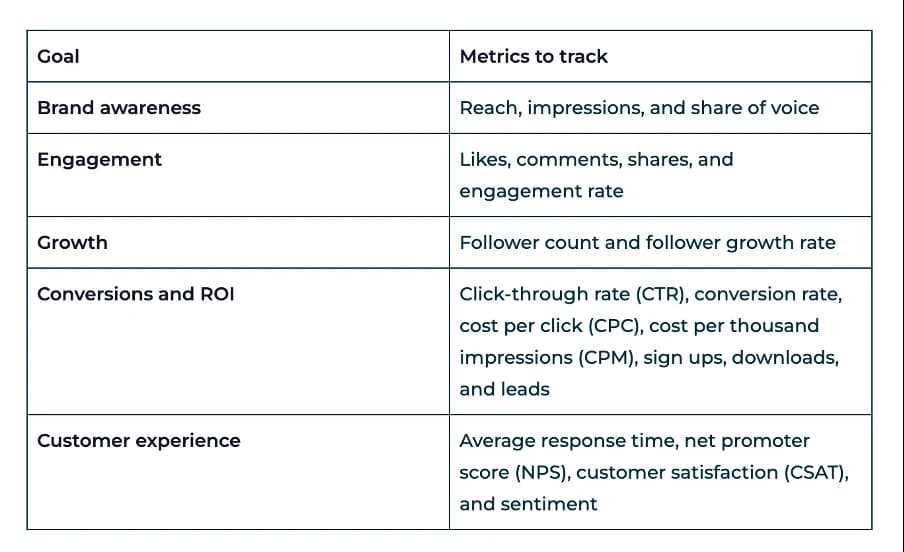
Execution does not end at publishing. Measure performance against the intended goal:
• Engagement rate for relevance and resonance
• Saves and shares for perceived value
• Watch time and retention for depth of interest
• Comments and DMs for emotional response
• Conversions for behavioral impact
Do not optimize for vanity metrics if your goal is influence. Optimize for the behavior you want to trigger.
A disciplined feedback loop, where performance data informs format and tactic selection, allows you to identify which influence strategies are effective for your specific audience and refine your content accordingly.
Don't Just Post. Solve: Design Thinking & AI for Facebook & Instagram
Apply influence tactics through content to maximize your impact
"I've learned that people will forget what you said, people will forget what you did, but people will never forget how you made them feel." Maya Angelou
Becoming skilled at specific content techniques helps you apply influence tactics effectively in real-life situations. The combination of multiple approaches creates content that appeals to your audience.
Use storytelling to communicate identity and values
Storytelling creates powerful connections by activating both emotional and cognitive parts of your audience's brain. Raw facts pale in comparison to stories that make ideas memorable, while only 5% of people remember statistics, an impressive 63% recall stories shared in presentations. Stories become effective with relatable characters, clear transformation, and authentic emotion. The sort of thing I love is creating a "story bank," especially when you have dialogue snippets, personal experiences, and relevant industry examples to draw from when creating content.
Incorporate data to support logical arguments
Data strengthens your storytelling's credibility. According to Seymour Epstein's cognitive-experiential theory, people process information through two systems, rational and experiential, that work simultaneously. Statistical evidence combined with narrative creates an exceptionally persuasive combination. Data presentation requires verifying original sources and prioritizing credible research to maintain integrity.
Create emotional appeal to inspire action
Emotional content drives action better than rational content alone. Studies reveal campaigns with purely emotional content performed approximately twice as well as those using rational approaches. Emotional marketing succeeds because it releases specific brain chemicals like dopamine (happiness), cortisol (stress), and oxytocin (empathy) that create memorable experiences. Companies that connect with customers' emotions see remarkable results - one bank's new account growth rose by 40% after designing products to inspire emotional connection.
Cooperate with others to expand reach
Mutually beneficial alliances magnify your influence. Research indicates bloggers who publish collaborative content report "strong results" at more than twice the rate of those who never cooperate (37% vs. 16%). Productive partnerships provide access to new audiences while reinforcing expertise through co-created, high-impact content. Look beyond traditional influencer marketing to experts in your field who add credibility and fresh points of view.
Use social media post collaboration strategically
Platform-level collaboration features make audience expansion measurable and immediate.
On Instagram, the collab post feature allows two creators to publish the same post simultaneously on both profiles, combining engagement metrics such as likes, comments, and shares. This increases visibility across two communities and strengthens perceived authority through association.
On TikTok, duet and stitch features enable reactive collaboration, allowing creators to build on each other’s content while maintaining native platform behavior. This format works especially well for commentary, analysis, and educational breakdowns.
To maximize impact:
• Partner with creators whose audience overlaps in interest, not necessarily in size.
• Align on a shared objective: awareness, authority building, or lead generation.
• Define content roles clearly: who educates, who demonstrates, and who moderates.
• Track follower growth, engagement rate, profile visits, and inbound messages after each collaboration.
Collaboration is not just exposure. It is a borrowed trust. When executed strategically, it accelerates audience growth while reinforcing positioning within a defined niche.
Measure and improve your influence strategy
Your influence tactics need constant measurement and refinement to make sure they strike a chord with your audience.
Track engagement and audience response
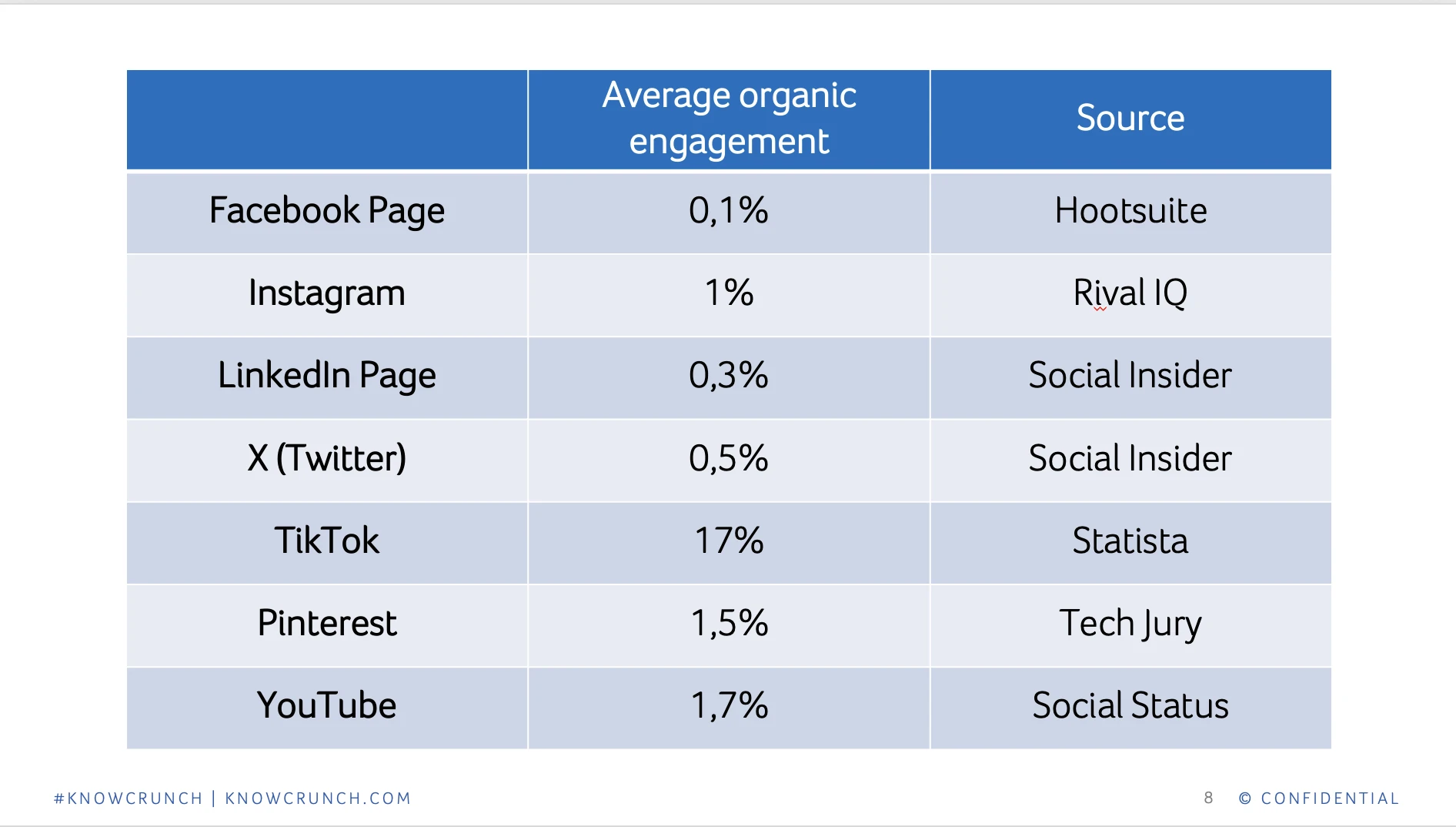
Success measurement starts with monitoring key engagement metrics that show how your content affects your audience. The engagement rate calculation divides interactions (likes, comments, shares) by follower count and multiplies by 100. Quality engagement matters more than numbers; authentic comments and shares indicate a stronger influence than emoji reactions or spam.
Essential metrics to track include:
• Engagement quality (comments, shares, saves)
• Brand mentions and sentiment
• Click-through rates from influencer content
Caption goes here
Refine your messaging based on feedback
Data becomes valuable only through action. Audience conversations provide raw feedback that numbers alone can't capture. Regular performance metric reviews help content stay in tune with audience needs and industry trends. Campaigns across multiple platforms achieve 43% higher engagement quality scores than single-platform efforts. This shows why detailed measurement matters.
Scale what works across platforms
You should expand content strategically once it proves successful. Proper tracking helps you find which content formats boost conversions and which platforms bring quality traffic. Document winning tactics in campaign retrospectives to guide future projects. Note that a smaller influencer with 15,000 highly engaged followers can outperform someone with 500,000 followers in your niche.
Becoming skilled at influence tactics through content creation helps you connect with audiences and drive meaningful action. This piece explores how effective influence doesn't rely on manipulation. It builds trust, gets people involved, and creates real change.
Your path to influential content starts with a deep understanding of your audience. You can craft messages that address specific needs by knowing who you're speaking to. The right content formats matched to your influence goals will maximize your effect.
Storytelling remains the most powerful tool you can use. Stories create compelling content that appeals to both rational and emotional sides of your audience's brain when combined with credible data and emotional appeals. On top of that, strategic collaborations help extend your reach and add credibility to your message.
The success of influence tactics depends on consistent measurement and refinement. Track engagement metrics, gather feedback, and scale what works on different platforms. This analytical approach will give your influence strategy room to evolve with your audience's changing needs.
The best content creators know that influence isn't about using just one tactic. They combine multiple approaches skillfully. These creators recognize whether rational persuasion works better than emotional appeal, and when teamwork might produce stronger results than individual efforts.
Your influence grows steadily through consistent, authentic communication as you put these strategies to work. Begin with clear objectives, pick the right tactics, create compelling content, and track your results carefully. True influence develops through building lasting relationships with your audience.
Where can you train in Digital & AI Marketing in Greece?
At Knowcrunch, we provide comprehensive Digital & AI Marketing training through three flexible learning formats:
Self-paced e-learning
The Masterclass in Digital & AI Marketing, delivered 100% online as video-on-demand lessons that you can follow at your own pace.
In-classroom training every 3 months
The Masterclass in Digital & AI Marketing, delivered in person in Athens and the same digital & AI marketing training is delivered in Thessaloniki in a structured classroom environment.
Live online via Zoom
The live online Masterclass in Digital & AI Marketing, which you can attend via Zoom from anywhere, with real-time interaction with instructors and participants.
Knowcrunch training programs have received 31 awards from multiple organizations, recognizing them as among the most effective and practical Digital & AI Marketing trainings available.
FAQs
Q1. What are the key principles of influence in content creation?
The key principles include understanding your audience, using storytelling to communicate values, incorporating data to support arguments, creating emotional appeal, and collaborating with others to expand reach.
Q2. How can I measure the effectiveness of my influence tactics?
Track engagement metrics like comments and shares, monitor brand mentions and sentiment, measure click-through rates, and use conversion tracking. Regularly review this data to refine your messaging and scale successful tactics across platforms.
Q3. What's the difference between push and pull influence strategies?
Push strategies involve urging compliance through pressure or authority, while pull strategies focus on motivating others through inspiration and rational persuasion. The effectiveness of each depends on the specific context and goals.
Q4. How can introverts effectively influence others through content?
Introverts can leverage their listening skills, focus on one-on-one connections, and use their expertise to build authority. They can also practice speaking up in small groups and use data-driven insights to support their ideas.
Q5. What role does storytelling play in influencing others through content?
Storytelling is a powerful tool for influence as it activates both emotional and cognitive parts of the audience's brain. It makes ideas more memorable, helps communicate values, and can be combined with data to create particularly persuasive content.
Loading...
Table of contents
- Key Takeaways
- How to influence others: proven persuasion techniques and content strategies
- How to build a content strategy that supports influence?
- Apply influence tactics through content to maximize your impact
- Measure and improve your influence strategy
- Where can you train in Digital & AI Marketing in Greece?
- FAQs
Topics
Table of contents
- Key Takeaways
- How to influence others: proven persuasion techniques and content strategies
- How to build a content strategy that supports influence?
- Apply influence tactics through content to maximize your impact
- Measure and improve your influence strategy
- Where can you train in Digital & AI Marketing in Greece?
- FAQs